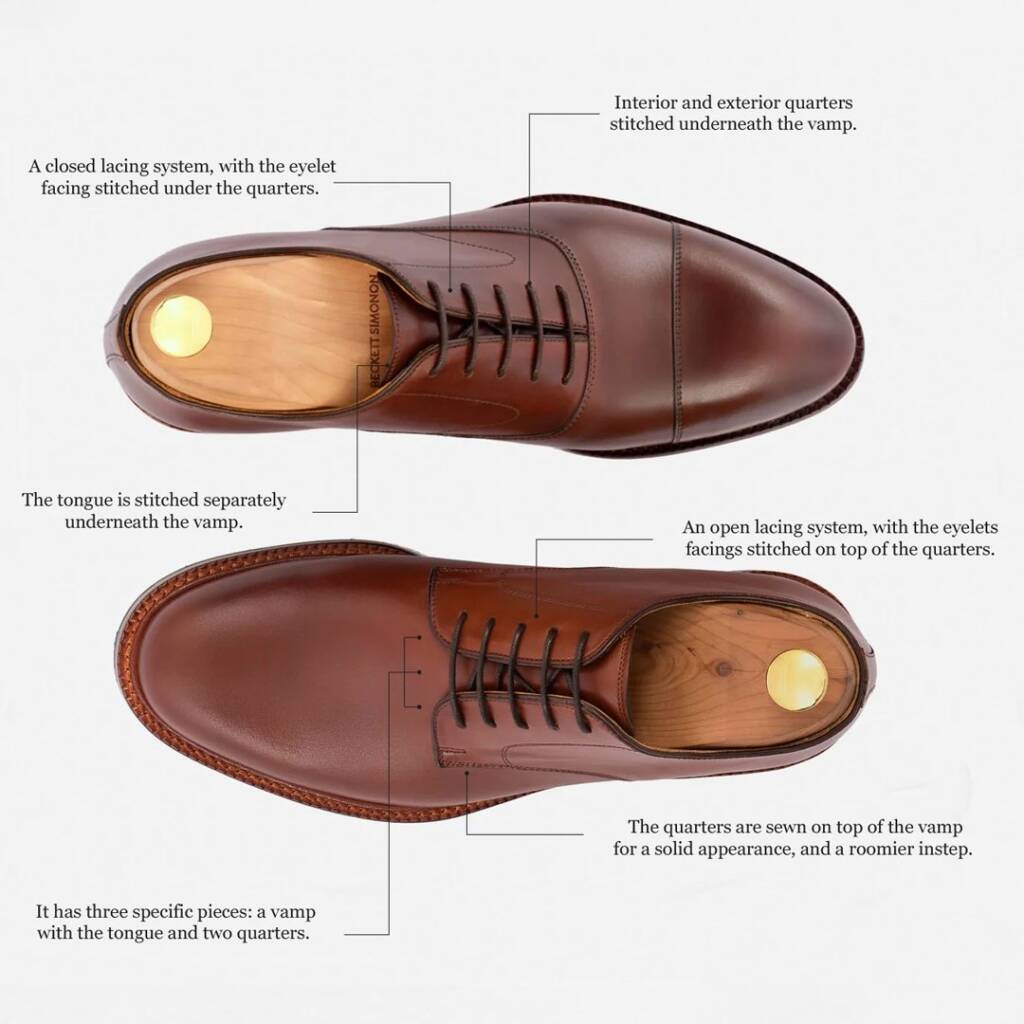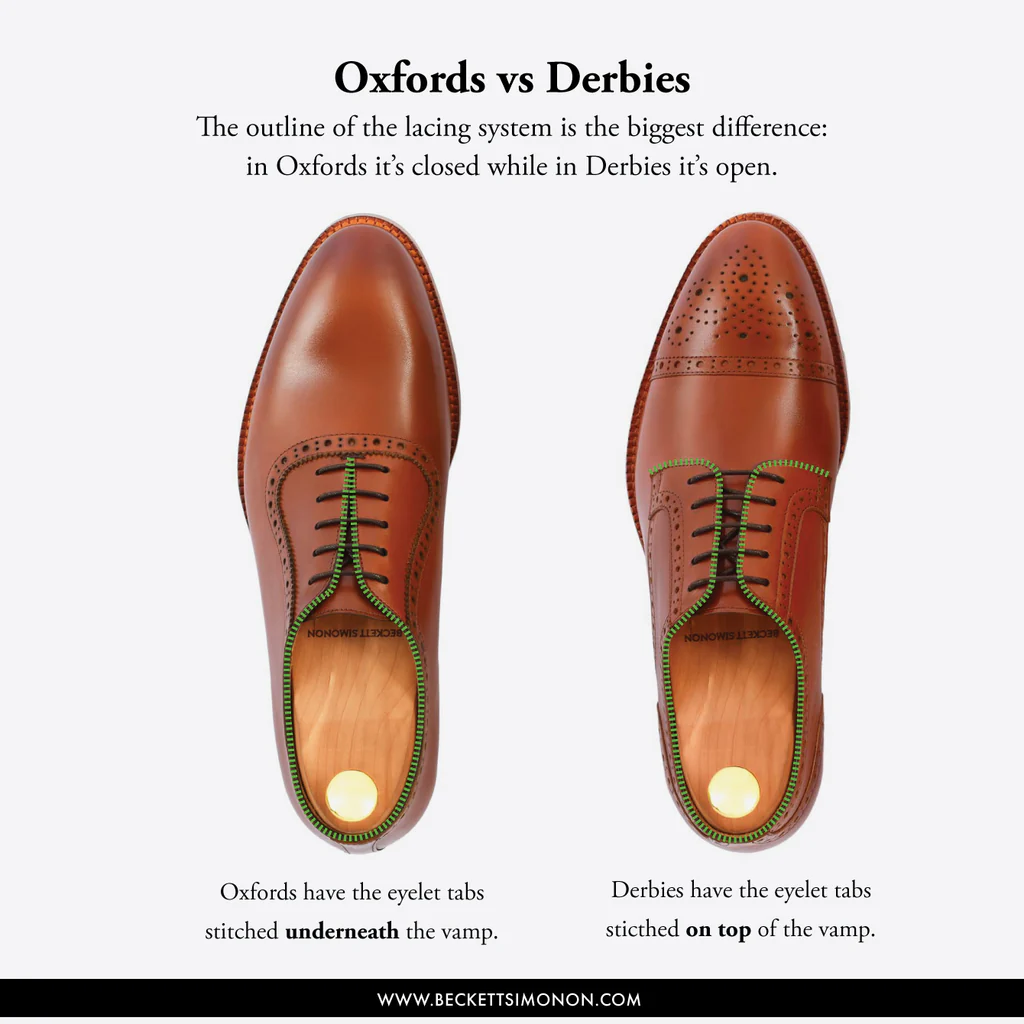
When selecting formal leather shoes, the distinction between Oxford and Derby styles is fundamental. While both fall within the category of classic dress footwear, their structural differences influence not only appearance but also formality, comfort, and versatility. Understanding these differences allows for more precise wardrobe decisions.
What Is an Oxford Shoe?
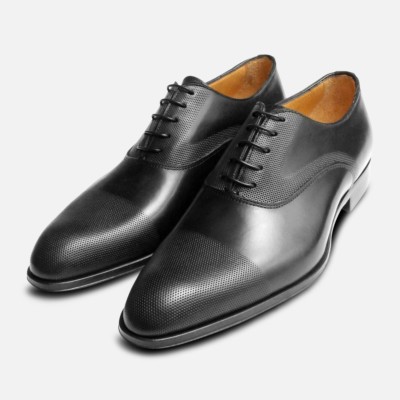
Oxford shoes are defined by their closed lacing system, where the eyelet tabs are stitched beneath the vamp. This construction creates a clean, streamlined silhouette with minimal visual interruption.
Key characteristics:
- Closed lacing (more formal appearance)
- Sleek, low-profile shape
- Minimal detailing in traditional models
Best suited for:
- Formal events (black tie, business formal)
- Corporate environments
- Tailored suits and structured outfits
Oxfords are generally considered the most formal type of dress shoe, particularly in black calfskin with a cap-toe or wholecut design.
What Is a Derby Shoe?
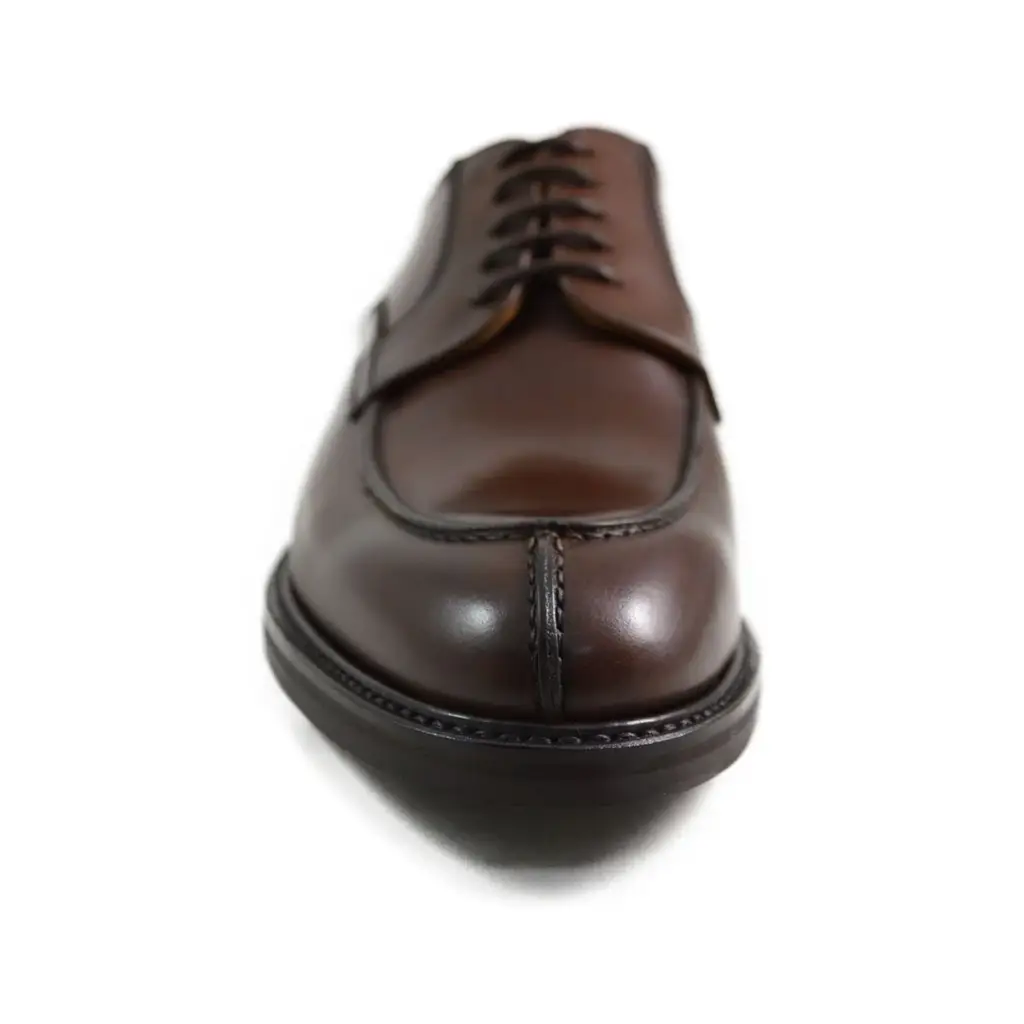
Derby shoes feature an open lacing system, where the eyelet tabs are stitched on top of the vamp. This results in a more relaxed structure and increased flexibility.
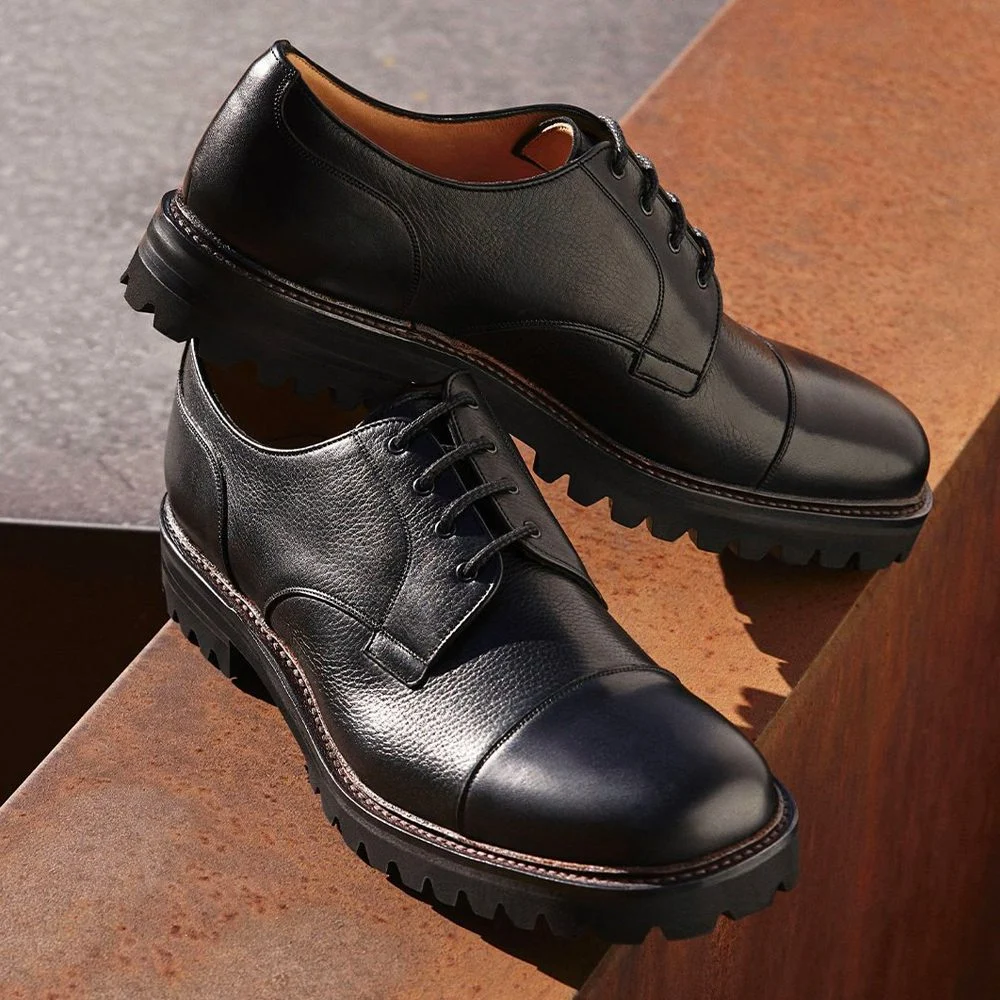
Key characteristics:
- Open lacing (less formal, more adaptable)
- Slightly bulkier silhouette
- Greater adjustability for different foot shapes
Best suited for:
- Business casual settings
- Smart casual outfits
- Everyday professional wear
Derbies are more versatile than Oxfords and can be styled with both formal and casual clothing.
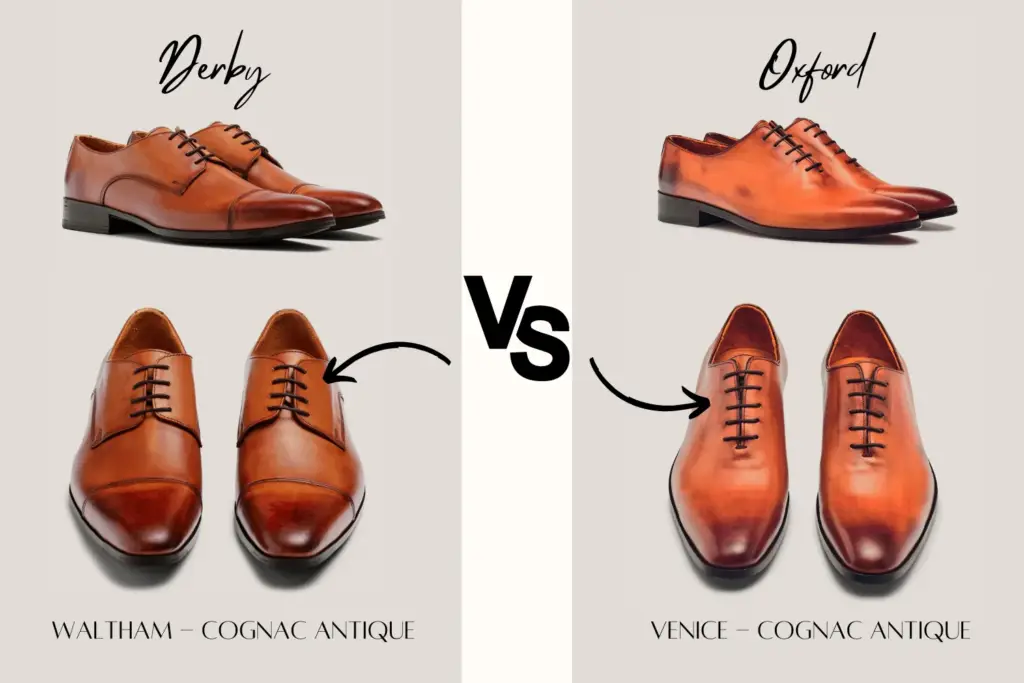
The Oxford vs Derby distinction is not merely aesthetic, it reflects fundamental differences in construction, function, and use case. Oxfords prioritize formality and precision, while Derbies offer adaptability and comfort.
Selecting between the two should be based on context: formal requirements, daily usage, and personal style preferences. In a well-rounded wardrobe, both styles serve complementary roles, ensuring coverage across a full spectrum of dress codes.